How Imaginative Play Fuels Development in Preschoolers

July 27, 2026

When a child picks up a wooden block and speaks into it as if it were a phone, they are making a sophisticated cognitive leap. This type of imaginative play serves as the primary engine for early development, turning a simple room into a training ground for complex thought and social awareness.


While traditional academic focuses often lean toward rote memorization, the act of pretending frequently gets sidelined as a mere pastime. In reality, the absence of creative exploration can stall a child’s ability to navigate unpredictable social situations or solve abstract problems.


Without the freedom to experiment with roles and consequences, preschoolers miss out on the framework for adult logic.


Examining how these stories unfold shows why certain activities are prioritized in high-quality early education. From language acquisition to managing complex emotions, the impact of these playful moments is permanent.

Defining the Mechanics of Pretend Play

Distinguishing imaginative play involves looking at the level of abstraction a child uses. In typical physical play, a child focuses on bodily coordination. However, in a pretend scenario, that same child might use a silk scarf to represent a rushing river. This transition from literal thinking to symbolic representation is the first step toward advanced mathematics, as both fields require the mind to use one thing to represent another.


The environment must support this by providing materials that do not have a single, pre-defined purpose. When a toy is too specific, it limits the narrative. Conversely, a collection of cardboard tubes and fabric scraps forces the child to invent a function for each item. Children who regularly engage in this level of abstraction develop a stronger ability to visualize outcomes before they happen.


The variety of props available can significantly alter the direction of the play:


  • Unstructured building materials like oversized blocks that become vehicles or furniture.
  • Fabric pieces and scarves that serve as blankets or environmental boundaries.
  • Real-world items used out of context, such as old keyboards or kitchen colanders.
  • Natural elements including large stones and pinecones that represent currency or food.
  • Writing tools that allow children to create maps for their adventures.


By providing these varied tools, caregivers allow the child to lead the session. This leadership builds a sense of agency, where the preschooler feels capable of altering their surroundings. Instead of following instructions, the child becomes the architect of the experience. This shift in power is fundamental for developing self-competence as ideas take physical shape.

Cognitive Gains and Mental Flexibility

The cognitive load required to maintain a pretend scenario is surprisingly high. A child must hold multiple pieces of information in their mind, such as their character's identity and the "rules" of the imaginary world.


When a preschooler stays in character while negotiating a plot twist, they are practicing high-level multitasking. This strengthens executive function and the ability to follow multi-step instructions.


Problem-solving occurs naturally when the physical world conflicts with the imaginary one. If a child pretending to be a chef lacks a "stove," they must innovate by using a flat piece of cardboard.

This requires the brain to ignore the literal appearance of an object to assign it a functional value. This ability to see possibilities where others see limitations is the root of innovative thinking.


Specific decision points often emerge during these sequences:


  • Determining how to bridge a gap using only the cushions available in the room.
  • Deciding who holds authority in a doctor-patient or pilot-navigator relationship.
  • Creating a sequence of events, like packing a bag before "traveling" to a new location.
  • Resolving what happens when an imaginary resource, like "magic fuel," runs out.
  • Adjusting the story when a new child joins the group with different ideas.


As children navigate these scenarios, they build a mental library of cause-and-effect relationships. They learn that certain actions lead to specific reactions within the logic of their story.


This internal consistency is a precursor to logical reasoning. By testing different variables, they are essentially conducting small-scale experiments in physics and social hierarchy.

Emotional Literacy Through Role-Play

Imaginative play acts as a safe laboratory for testing big feelings. A preschooler might find a real trip to the dentist intimidating, but when they are the one wearing the "dentist" mask, they regain a sense of control.


This reversal of roles allows them to process fear on their own terms. By acting out a stressful scenario, they explore the emotions involved without immediate pressure.


This process also builds a bridge toward empathy. When a child takes on the role of a "brave firefighter," they are practicing how to feel what another person feels.


They must consider the motivations of their character to make the story believable. This perspective-taking is a complex emotional skill that requires stepping outside of one's own ego and acknowledging the needs of others.


Caregivers often notice specific emotional milestones during these sessions:


  • The ability to label a character's feelings, such as saying a bear is "scared."
  • Practicing self-soothing techniques by comforting a doll during a pretend crisis.
  • Exploring the concept of fairness through the distribution of imaginary goods.
  • Revisiting a playground disagreement to try out a different, more positive resolution.
  • Expressing joy through exaggerated movements that mirror a character's success.


Refining these emotional responses in a low-stakes environment prevents the child from feeling paralyzed by those same emotions in real life. They develop a vocabulary for their internal state, which reduces the need for physical outbursts.


When a child can identify a character's frustration, they are closer to identifying it in themselves. This self-awareness is the foundation of emotional regulation.

Social Mechanics and Collaboration

In a group setting, imaginative play becomes a masterclass in social negotiation. Unlike solitary play, group play requires a "play contract" where all participants accept the same imaginary premises.


If one child decides the floor is lava and another disagrees, the play breaks down. Consequently, children spend time bargaining and compromising to keep the game alive, which is a powerful motivator for learning.


Language development accelerates during these interactions because the plot requires specific vocabulary. A child playing "hospital" might use words like "bandage" or "heartbeat" that wouldn't appear in standard conversation.


This experimentation with tone and word choice expands their linguistic toolkit. They learn to adapt their communication style to fit the audience and the role they are playing.


The social rules of the classroom are reinforced through these interactions:


  • Negotiating the casting of roles to ensure every participant feels included.
  • Practicing how to enter a play scenario without disrupting the flow.
  • Establishing boundaries for physical space, such as defining where a "house" ends.
  • Distributing chores or tasks, such as who cleans the pretend kitchen.
  • Managing the transition from the play session back to the real-world routine.


These social exchanges are more effective than a lecture on sharing. In the context of the story, the child sees the immediate benefit of cooperation.


If they refuse to listen, the game may stop, providing an immediate and natural consequence. This feedback loop teaches the value of social harmony in a way that feels meaningful and practical.

Cultivating Potential Through Creative Play

The lessons learned during these hours of pretending stay with a child far beyond their preschool years. By leaning into their natural urge to create stories, children build the mental strength to handle academic challenges and social hurdles with ease. Every time they transform a room, they are refining their ability to think critically and connect with others.


At Wee Learn & Play Child Care Center, we see the profound impact of these moments every day. Our philosophy centers on providing the right balance of guidance and freedom, ensuring every child has the resources to explore their imagination safely. We believe a child’s play is their most important work, and our environment honors that work with high-quality materials and supportive educators.


Our preschool and pre-K programs focus on these developmental needs, offering a curriculum that blends creative exploration with fundamental skill-building. We provide a space where your child can experiment with roles, solve complex problems, and build lasting friendships.


We invite you to discover nurturing preschool and pre-K care that sparks your child's imagination!


Should you wish to know more, we encourage you to reach out at (860) 689-9867 or send an email to rhonda@weelearnandplay.com

Recent Posts

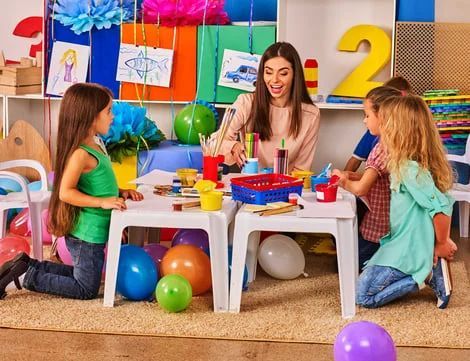
Children at a birthday party table with balloons, colorful gifts, and a smiling adult woman.
September 15, 2026
Play is vital for kids' growth & learning. Learn how to engage your child with fun activities. Contact us for more information!
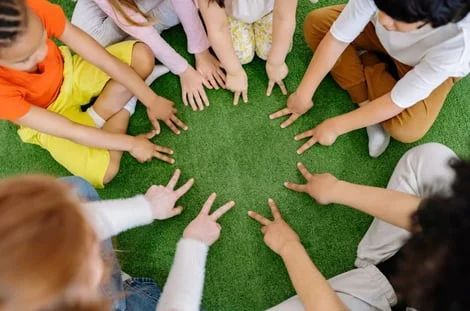
Children sitting in a circle on grass, pointing inward with hands together.
September 15, 2026
Learn how group games help children develop social skills. Engage with us to enhance their cognitive & emotional growth.
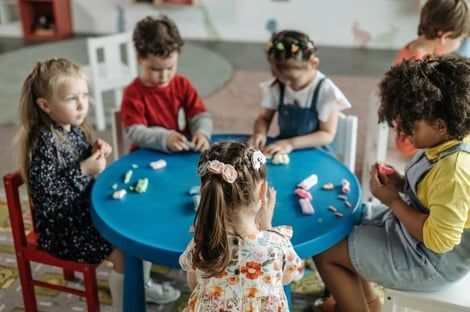
Children seated around a blue table, playing with small colorful objects in a classroom
September 15, 2026
As a parent, you want your child to have the best possible start in their educational journey, and preschool is a critical component of that journey. At Wee Learn & Play Child Care Center, we understand the importance of early childhood education and offer a comprehensive range of preschool activities that cater to the unique needs and learning styles of young children. Our preschool activities are designed to provide children with a stimulating, safe, and nurturing environment where they can learn and grow. We believe that children learn best through play, exploration, and hands-on experiences, and our curriculum is designed to reflect this belief. Our preschool activities are designed to foster cognitive, social, and emotional development. Overall, we are committed to providing a high-quality preschool education that sets the foundation for a lifetime of learning and success.  We invite you to explore our preschool activities and learn more about how we can support your child's growth and development.
Show More
Children at a birthday party table with balloons, colorful gifts, and a smiling adult woman.
September 15, 2026
Play is vital for kids' growth & learning. Learn how to engage your child with fun activities. Contact us for more information!
Children sitting in a circle on grass, pointing inward with hands together.
September 15, 2026
Learn how group games help children develop social skills. Engage with us to enhance their cognitive & emotional growth.
Children seated around a blue table, playing with small colorful objects in a classroom
September 15, 2026
As a parent, you want your child to have the best possible start in their educational journey, and preschool is a critical component of that journey. At Wee Learn & Play Child Care Center, we understand the importance of early childhood education and offer a comprehensive range of preschool activities that cater to the unique needs and learning styles of young children. Our preschool activities are designed to provide children with a stimulating, safe, and nurturing environment where they can learn and grow. We believe that children learn best through play, exploration, and hands-on experiences, and our curriculum is designed to reflect this belief. Our preschool activities are designed to foster cognitive, social, and emotional development. Overall, we are committed to providing a high-quality preschool education that sets the foundation for a lifetime of learning and success.  We invite you to explore our preschool activities and learn more about how we can support your child's growth and development.
Show More